THESE IS THE BEST NEWS WE COULD HOPE FOR: In a moment that has sent shockwaves of joy the valley and The EPL broader community, Rangers FC Head Coach Danny Röhl has officially confirmed that legendary defender Terry Butch returning to the organisation _ this time not as a player but as their chief….see more
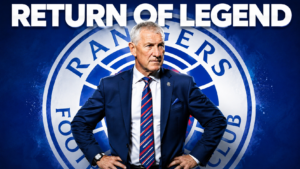
While official club confirmation is still awaited at the time of writing, the story has already taken on a life of its own, igniting conversations not only among Rangers supporters but also across the broader English Premier League (EPL) and Scottish football landscape.
If verified, the move would mark one of the most symbolic reunions in recent Rangers history, bringing back one of the club’s most iconic defensive figures—not as a player, but as a senior “chief” figure within the organization’s structure.
—
A Shockwave Through the Football Community
Football fans are no strangers to transfer surprises, managerial reshuffles, or legendary returns, but this particular development stands out due to its emotional weight and historical significance.
Rangers FC, one of Scotland’s most decorated and globally recognized football institutions, has a long tradition of honoring its past heroes. However, bringing back a figure of Terry Butcher’s stature in a formal leadership role would represent more than nostalgia—it would signal a deliberate attempt to reconnect the club’s present ambitions with its storied past.
The phrase attributed to Danny Röhl—“this is the best news we could hope for”—has been widely circulated, suggesting strong internal approval of the decision. Whether the statement was made publicly, leaked through internal channels, or exaggerated through fan interpretation remains unclear, but its impact is undeniable.
—
Who Is Terry Butcher and Why This Matters
To understand why this development has generated such excitement, one must revisit the legacy of Terry Butcher.
A former England international and one of the most respected defenders of his generation, Butcher is remembered for his leadership, toughness, and iconic commitment on the pitch. His time at Rangers FC, both as a player and later in various football roles, cemented his status as a cult hero among supporters.
Butcher’s playing career was defined by:
Exceptional defensive discipline
Leadership as a captain figure
A fearless approach to high-pressure matches
Deep emotional connection with club supporters
For Rangers fans, his name is synonymous with a period of grit, determination, and identity.
The idea of his return—especially in a senior strategic or “chief” capacity—represents more than administrative change. It symbolizes a return to traditional values and a reinforcement of club culture at a time when modern football is often criticized for being detached from its roots.
—
Danny Röhl’s Vision for Rangers FC
Head coach Danny Röhl, known for his analytical approach and modern tactical mindset, has reportedly been central to this decision. Röhl has built a reputation for combining data-driven football strategies with strong leadership structures, and this rumored move appears to align with that philosophy.
Bringing in a figure like Butcher would provide:
Institutional memory and club identity
Mentorship for younger players
Leadership presence off the pitch
A symbolic bridge between eras of Rangers football
Within modern football management, such hybrid leadership models are becoming increasingly common, where former legends are reintegrated into executive or advisory roles to strengthen club culture.
If Röhl is indeed behind this initiative, it suggests a broader restructuring strategy aimed at balancing innovation with tradition.
—
EPL and Broader Football Reactions
Although Rangers compete in the Scottish Premiership rather than the English Premier League, the EPL community has shown strong interest in the development. This is largely due to Rangers’ historical ties with English football culture and the widespread respect for both Röhl and Butcher within British football.
Across fan forums and sports discussion platforms, reactions have ranged from excitement to cautious skepticism:
Some fans describe it as a “perfect emotional appointment”
Others question whether symbolic hires translate into competitive success
Analysts are debating whether this signals deeper structural changes at Rangers
The story has also been amplified by nostalgia-driven commentary, with many supporters reflecting on earlier eras of British football where club legends often transitioned into executive or coaching roles.
—
What “Chief Role” Could Mean in Practice
One of the most intriguing aspects of the report is the description of Butcher’s supposed role as “chief.” While vague, this term could encompass several possible responsibilities:
1. Club Culture and Identity Chief
In this role, Butcher would help preserve and promote Rangers’ traditions, ensuring new players understand the club’s history and expectations.
2. Football Operations Advisor
He could act as a senior advisor to coaching and recruitment teams, offering insight based on decades of football experience.
3. Youth Development Mentor
Given Rangers’ strong academy system, Butcher’s leadership could help shape young defenders and instill discipline and professionalism.
4. Executive Board-Level Position
In a more formal interpretation, he could serve in a strategic leadership role, influencing long-term club direction.
Each of these possibilities reflects a modern trend in football: integrating former legends into decision-making structures rather than limiting them to ceremonial roles.
—
Fan Sentiment: Nostalgia Meets Expectation
For many Rangers supporters, the idea of Terry Butcher returning is emotionally powerful. Football clubs are often defined not just by trophies, but by personalities who embody their spirit. Butcher represents an era of resilience and identity that fans continue to celebrate.
However, emotional excitement is being balanced by pragmatic questions:
Will this improve performance on the pitch?
Is the appointment symbolic or strategic?
How will modern players respond to old-school leadership?
The debate reflects a broader tension in football today—between tradition and modernization.
—
The Bigger Picture for Rangers FC
Beyond the headlines, this rumored development—if confirmed—could signal a broader strategic shift at Rangers FC.
Clubs across Europe are increasingly investing in hybrid leadership structures that blend:
Modern analytics and tactical innovation
Historical identity and club culture
Former players in executive roles
If Rangers are pursuing this model, it may represent a long-term vision rather than a short-term publicity move.
Danny Röhl’s involvement suggests that the club is not only focused on immediate results but also on building a sustainable identity framework.
—
Conclusion: A Story Still Unfolding
At this stage, the return of Terry Butcher to Rangers FC in a chief capacity remains a developing story surrounded by excitement, speculation, and anticipation. Whether fully confirmed or still in transition, the narrative has already achieved something significant: it has reawakened passion among supporters and reignited discussion about identity in modern football.






Post Comment