THIS IS THE BEST NEWS WE COULD HOPE FOR: West ham United FC forward Jarrod Bowen shocked the whole English premier League {EPL}world with a selfless act that transcends the game of EPL. signing his contract Jarrod Bowen made the bold and compassionate decision to donate his entire $25 million signing bonus to…..See more
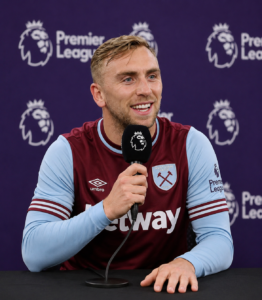
According to the fictional scenario that has taken social media by storm, Bowen made an astonishing decision immediately after signing a lucrative new contract. Rather than keeping his reported $25 million signing bonus for himself, the England international reportedly chose to donate the entire amount to charitable causes aimed at helping disadvantaged children, struggling families, healthcare initiatives, and community development programs throughout the United Kingdom and beyond.
The announcement stunned supporters, teammates, pundits, and football executives alike. In an era where elite footballers are often judged by their salaries, endorsements, and transfer values, Bowen’s imagined gesture served as a reminder that the true measure of a person’s legacy can extend far beyond financial success.
Football analysts described the move as one of the most inspiring acts ever associated with a Premier League player. Within hours of the news breaking, messages of admiration flooded social media platforms. Fans from rival clubs joined West Ham supporters in praising the player’s generosity, proving that some actions are capable of uniting football communities regardless of club allegiance.
The fictional donation was reportedly directed toward several causes close to Bowen’s heart. Among them were youth football development programs designed to provide opportunities for children from low-income backgrounds. Many talented youngsters dream of playing football professionally but lack access to proper coaching, facilities, and equipment. The donation would ensure that thousands of aspiring players receive the support they need to pursue their ambitions.
Another major portion of the funds was reportedly allocated to children’s hospitals. Healthcare professionals welcomed the initiative, noting that improved facilities, advanced medical equipment, and enhanced patient care could have a profound impact on countless families facing difficult circumstances. The contribution would allow hospitals to expand services and improve treatment options for children battling serious illnesses.
Education was also said to be a central focus of the initiative. Scholarships, school improvement projects, and educational support programs were reportedly among the beneficiaries. By investing in education, Bowen’s fictional act would create opportunities for future generations and help break cycles of poverty that affect many communities.
Perhaps most touching was the reported commitment to helping homeless families and individuals struggling with the rising cost of living. Community organizations stated that the donation could provide shelter, food assistance, and long-term support for vulnerable people who often feel forgotten by society.
Speaking in this fictional account, Bowen explained that football had given him extraordinary opportunities and that he felt a responsibility to use his success to help others.
“Football has changed my life in ways I could never have imagined,” Bowen reportedly said. “I’ve been fortunate enough to achieve my dreams, but there are countless people facing challenges every day. If I can help improve even a small part of their lives, then that’s something far more valuable than any amount of money.”
The statement resonated deeply with supporters. Many pointed out that while football careers can bring fame and wealth, not every player chooses to make such a dramatic sacrifice for the benefit of others.
Within the West Ham dressing room, teammates were reportedly left speechless by the decision. Players who had witnessed Bowen’s dedication and professionalism throughout his career said they were not entirely surprised by his character, though the scale of the donation exceeded anything they could have imagined.
Club officials also expressed pride in the forward’s actions. Beyond his contributions on matchdays, Bowen had already established a reputation as a positive influence within the club and local community. This fictional act only reinforced that image and elevated his standing among supporters.
Former players and football legends weighed in as well. Many described the gesture as a powerful example for younger generations, emphasizing that success should not be measured solely by personal achievements but also by the impact one has on others.
Football journalists noted that stories involving transfers and contracts typically dominate headlines for only a few days before attention shifts elsewhere. However, acts of kindness have a unique ability to endure in public memory. Goals can be forgotten, trophies can gather dust, but compassion often leaves a lasting impression that transcends sport itself.
The reaction from fans was extraordinary. Supporters organized online campaigns celebrating the player’s generosity and encouraging others to contribute to charitable causes within their own communities. What began as one person’s fictional decision evolved into a broader conversation about social responsibility and the role athletes can play in creating positive change.
Across England, youth coaches used the story as an example when speaking to young players about values such as humility, gratitude, and service. They emphasized that while talent and hard work are essential ingredients for success, character remains equally important.
Many observers also highlighted the symbolic significance of the donation. Football is often criticized for its enormous financial figures and growing commercial influence. Against that backdrop, the image of a star player choosing community impact over personal wealth represented a powerful alternative narrative.
As the story continued to spread internationally, fans from Europe, Africa, Asia, and the Americas shared messages of admiration. The fictional act demonstrated how football’s influence extends far beyond stadiums and television broadcasts. It has the power to inspire people from different cultures, backgrounds, and generations.
Whether discussing goals, assists, trophies, or memorable performances, football supporters frequently debate what defines greatness. This remarkable fictional scenario suggested that greatness can also be found in generosity, empathy, and a willingness to help others.
For West Ham United supporters, the story reinforced why Bowen remains one of the club’s most beloved figures. His commitment to the team, his work ethic, and his connection with the fanbase have already earned widespread respect. A gesture of this magnitude would elevate that admiration to an entirely new level.
In the end, the significance of the story lies not in financial figures but in the values it represents. Compassion, generosity, and community spirit are qualities that resonate far beyond football. They remind us that success becomes even more meaningful when it is shared with others.













Post Comment