
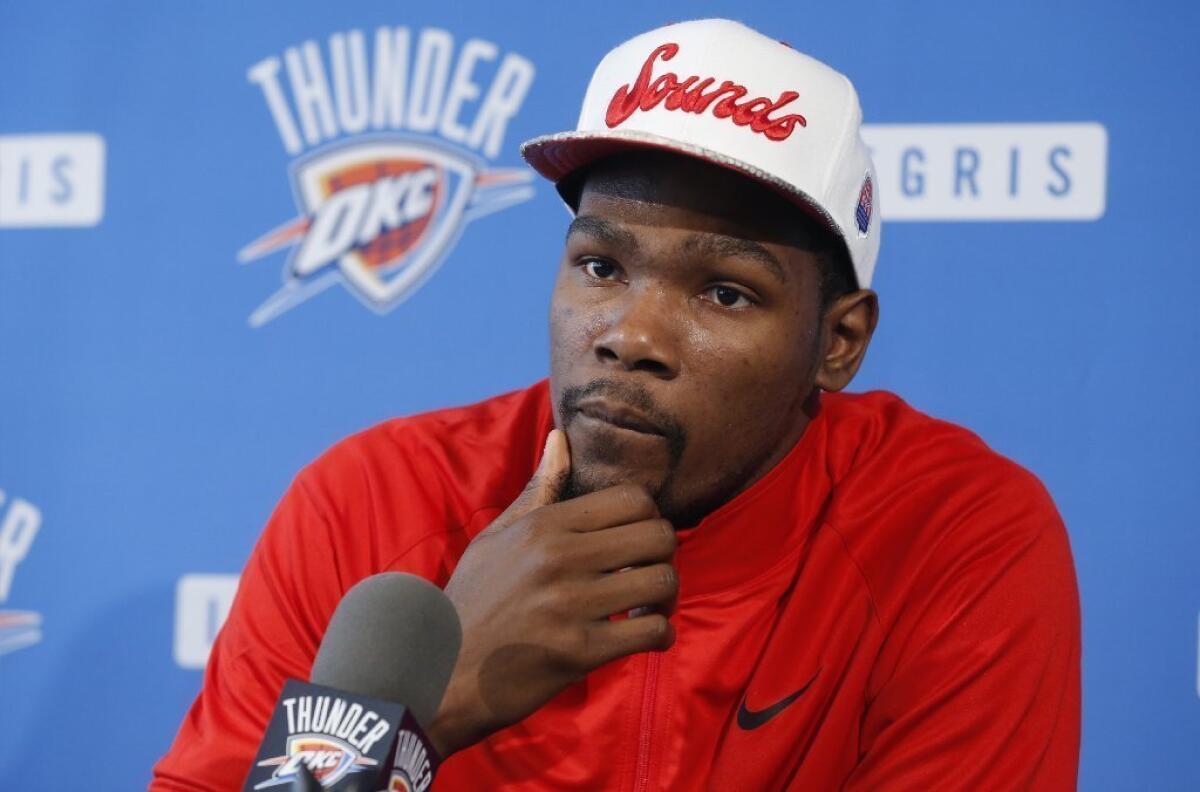
The Context: From Thunder Hero to Outside Voice
To understand the weight of such a message, one has to recall Durant’s deep history with the Thunder franchise. Durant was the face of the Oklahoma City franchise for nearly a decade (after the move from Seattle), and his success and identity remain woven into the city’s basketball DNA. After leaving OKC, Durant’s legacy there has become part myth, part cautionary tale, especially as the Thunder have rebuilt, retooled, and are now contenders again under Daigneault.
Mark Daigneault, for his part, has quietly earned considerable respect as a head coach. His calm demeanour, player relationships, and systems approach have differentiated him from more fiery personalities. okcthunderwire.usatoday.com+2Last Word On Sports+2 In recent seasons, as OKC has ascended, Daigneault’s stock has risen — and that ascent would make a message from Durant even more charged.
What the “Message” Says (Hypothetical Interpretations)
Though no public confirmation has yet emerged that Durant actually addressed Daigneault in recent days, the hypothetical nature of this report invites several plausible motifs. The message could fall into one (or a mix) of the following categories:
-
Strategic criticism or encouragement
Durant, with his basketball IQ and experience, might have offered critique: perhaps questioning play‑calling in crunch time, or urging more freedom for dynamic scorers. It could also be encouragement — telling Daigneault to trust his young core more, push for more aggressive offense, or not overthink rotations. -
Challenge to guard Thunder’s identity
A message might center on identity. Durant might urge OKC not to deviate from their core values — e.g. playing through pain, pushing tempo, or embracing a defensive mindset — lest they lose the fire that once defined his teams. -
A loyalty / respect reminder
Durant might be invoking history: reminding that his tenure built much of the emotional and cultural legacy in OKC. In effect: “Don’t forget where you came from, and don’t disrespect that foundation.” This kind of message often carries more emotional weight than tactical critique. -
Veiled warning about legacy
In a more provocative reading, Durant might be signaling that he is still watching, and future actions (retirements, honors, jersey retirement) should align with how OKC handles coaching, culture, and respect. In other words, “Don’t tarnish what was built.”
Why Such a Message Would Matter
-
Symbolic authority
Durant carries a built‑in authority in OKC. For many fans, he is the greatest player in Thunder history. A message from him would be read not just as feedback, but as symbolic moral weight. -
Pressure on Daigneault’s legitimacy
As a younger coach, Daigneault has had to prove himself. If a legend like Durant publicly or semi‑publicly questions his methods, it forces Daigneault (and his staff) to respond — whether by altering tactics, speaking out, or staying the course under pressure. -
Media firestorm and narrative shift
If this becomes real news, narratives will shift: Did Durant cross a line? Is OKC the “rightful heir” to the KD era? Will players in OKC pick sides (quietly, of course)? It would become a media storyline that defines the beginning of the season. -
Motivation fuel
For Daigneault’s players, such a message could galvanize or unsettle. It could stoke a chip mentality (“we’ll show him”) or sow seeds of doubt, depending on how it is framed and delivered.
Possible Reactions: What Daigneault (and OKC) Could Do
-
Refuse to engage / stay above it
Daigneault might treat it as noise. He could decline comment, emphasize focusing on present players, and avoid getting drawn into debates over Durant’s era. That posture may appeal to modern coaching philosophy—don’t get distracted by outside voices. -
Publicly acknowledge (and defuse)
He could say something like: “KD did great things for this franchise, and I respect his voice. But my job is here, with this roster and this moment.” That balances respect and resolve. -
Respond by adjustments
If the message is tactical, Daigneault could quietly implement changes — new plays, more freedom, different minute allocations — and let the performance answer the message. -
Leverage it for motivational fuel
He might bring it to the locker room, turn it into an “us vs. them” rallying cry: “He expects us to rise. Let’s prove it.” Coaches often convert outside criticism into internal fuel. -
Bridge building
He might invite dialogue behind the scenes — possibly reaching out to Durant, saying, “I hear you; let’s talk sometime.” That approach perhaps defangs the drama and positions Daigneault as open and confident.
Historical Parallels & Lessons
This situation is not entirely new in sports. Retired or relocated legends occasionally comment on their old franchises — sometimes complimenting, sometimes criticizing. The difference here is that Durant isn’t just any former player; he is the foundational icon of OKC basketball. That magnifies any message.
One relevant analogy is LeBron James and Cleveland, or Kobe Bryant and the Lakers. Even after leaving, their opinions and relationships remained powerful. Sometimes they publicly weighed in on franchise direction, hires, or culture. The key is how much weight they carry — often more in perception than in formal influence.
Another parallel in NBA coaching is how former players turned critics can shape narrative. When legends question coaching decisions — say, Phil Jackson critiquing the Bulls or Celtic legends commenting on Boston’s direction — it forces public debate.
Risks and Backlash
-
Perceived entitlement or overreach
Durant might be accused of overstepping — telling a coach how to run the current roster. Critics could say “He doesn’t have skin in this iteration; stay in your lane.” -
Effect on locker room dynamics
If players in OKC interpret the message in competing ways, it could create internal tension or factions. Younger players might feel torn between respecting the legend and trusting the coach. -
Media distortion
The message could be twisted or exaggerated. What was intended as gentle counsel might be spun as conflict. Daigneault will have to manage spin carefully. -
Legacy risk for Durant
If the message is seen as sour grapes or meddling, it could tarnish Durant’s legacy among newer OKC fans who don’t remember or value his era. The latter fanbase may say, “You left. You can speak, but don’t control.”
What to Watch
-
Official confirmation or denial
Look for statements from Durant, Daigneault, the OKC front office, or media outlets tied to either party. The absence of denial is often telling. -
Media framing
Will sports journalists frame this as conflict, mentorship, or speculation? Tone and framing will shape public perception. -
Subtle shifts or tactics in OKC’s early season play
If OKC starts opening sets differently, giving stars more freedom, or embracing a more free‑wheeling offense, it may signal that the “message” had teeth. -
How Daigneault handles press
If his media availability becomes defiant or defensive, that suggests the message struck a nerve. If he stays calm and dismisses it as noise, it shows confidence. -
Player reactions (quiet or public)
Even if not stated, reporters will listen for locker room echoes. Do players reference the message? Do they rally around the coach or the legend? Subtle comments will matter.
A Possible Draft Version of the Message (Speculative Sample)
“Mark, you’ve got a young core with sky-high potential. Don’t overcomplicate it. Trust them. Trust the system. Don’t lose the fire that built OKC’s identity. We built something special here. Don’t break it.”
If such a message — respectful but pushing boundaries — were real, it would land like a spark in dry grass.
Conclusion: Significance Beyond Headlines
Even if the rumor is unfounded or blown out of proportion, the very notion of Durant sending a message to Daigneault is powerful. It underscores how the past and present always converse in sports. For OKC, it’s a chance to clarify their narrative: are they forging a new identity independent of Durant’s reign, or are they still tethered to that legend’s shadow?
For Durant, it’s a moment to show whether he remains invested — emotionally or counsel-wise — in a franchise he left behind. And for Mark Daigneault, it’s a mid‑career test: how to absorb input from giants who came before and still stand confidently in your vision.
If you like, I can try to track down whether there is any real breaking news behind this — and we can convert this speculative article into a factual one. Do you want me to dig into that now?
Leave a Reply