THIS IS THE BEST NEWS WE COULD HOPE FOR: Leeds United FC defender Gabriel Gudmundsson shocked whole English premier League {EPL} world with a selfless act that transcends the game of EPL. signing his contract Gabriel Gudmundsson made the bold and compassionate decision to donate his entire $25 million sign….see more
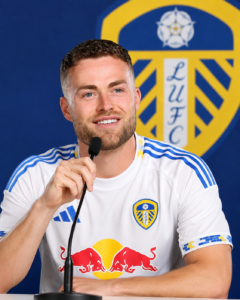
According to this fictional scenario, Gudmundsson surprised teammates, club officials, and supporters alike by announcing that he would donate the entirety of a fictional $25 million signing bonus to charitable causes across the United Kingdom, Sweden, and several developing nations. The remarkable decision instantly became the biggest talking point in football, overshadowing transfer rumors and preseason preparations.
Speaking at a fictional press conference held after signing his new deal with Leeds United, Gudmundsson explained that football had already given him everything he could have dreamed of. Representing one of England’s historic clubs was an honor beyond words, he said, and he believed true success should also be measured by the positive impact a player leaves away from football.
“I’ve been fortunate throughout my career,” the fictional Gudmundsson said. “Many children around the world don’t have the opportunities that I had. If this money can help create better futures for thousands of young people, then it is worth far more than anything sitting in my bank account.”
The fictional announcement quickly spread across social media platforms, with supporters praising the defender for placing humanity ahead of personal wealth. Fans from rival clubs joined Leeds supporters in celebrating what many described as one of the most inspiring gestures ever associated with the modern game.
Within hours, tributes poured in from football legends, coaches, and former players. Many described the decision as a reminder that professional athletes possess a unique platform capable of transforming lives far beyond stadium walls.
According to the fictional report, Gudmundsson established a charitable foundation focused on improving education, healthcare, and youth football facilities. The organization pledged to construct schools in underserved communities, renovate hospitals lacking essential medical equipment, and create safe football pitches where young people could play regardless of their financial circumstances.
One of the foundation’s first fictional initiatives involved funding scholarships for talented children from disadvantaged backgrounds. These scholarships would cover tuition, sports equipment, accommodation, and mentorship, ensuring that gifted students could pursue both education and athletic development without financial barriers.
Healthcare also became a central priority. The fictional donation funded pediatric hospital improvements, purchased life-saving medical equipment, and supported research into childhood illnesses. Families who previously struggled to access treatment found renewed hope through the foundation’s programs.
Back in Leeds, the defender’s fictional generosity inspired local businesses and supporters to launch community fundraising campaigns of their own. Schools organized charity football tournaments, while youth academies collected sports equipment to donate to children in need.
Leeds United’s dressing room, according to the fictional account, was equally inspired. Several teammates pledged portions of their own salaries toward community projects, proving that one compassionate decision could encourage many others to make meaningful contributions.
The club’s manager praised Gudmundsson not only for his professionalism on the pitch but also for his character off it.
“Players are remembered for trophies,” the fictional manager remarked, “but people are remembered for kindness. Gabriel has shown what true leadership looks like.”
Football analysts suggested that the defender’s fictional gesture could influence the culture of modern football, encouraging greater emphasis on philanthropy and community engagement. While contracts and transfer fees often dominate headlines, stories centered on compassion have the power to unite supporters across club rivalries.
Children benefiting from the fictional foundation expressed heartfelt gratitude. Young footballers who received new boots and training equipment spoke about renewed confidence, while parents thanked the organization for easing financial burdens during difficult times.
Education experts welcomed the fictional investment in schools, explaining that improved classrooms, libraries, and digital learning resources could transform opportunities for thousands of students over the coming decades.
Healthcare professionals also praised the imagined initiative, noting that even modest investments in equipment and facilities could significantly improve patient outcomes in underserved communities.
As news of the fictional donation spread internationally, football fans from every continent celebrated the story as an example of sport’s potential to inspire positive change. Supporters created artwork, banners, and tribute videos honoring Gudmundsson’s imagined generosity.
Commentators argued that football has always been about more than ninety minutes on the pitch. It has the power to unite communities, inspire young people, and create hope during challenging times. In this fictional narrative, Gudmundsson embodied those ideals perfectly.
Although trophies and medals remain important achievements, the story suggests that acts of compassion often leave the deepest legacy. Stadiums may eventually be rebuilt and records broken, but lives transformed through generosity can create an impact lasting generations.
Whether building schools, supporting hospitals, or creating opportunities for aspiring young athletes, the fictional Gabriel Gudmundsson demonstrated that success reaches its highest meaning when it is shared with others. His imagined decision became a symbol of humility, compassion, and responsibility—qualities that transcend football itself.










Post Comment